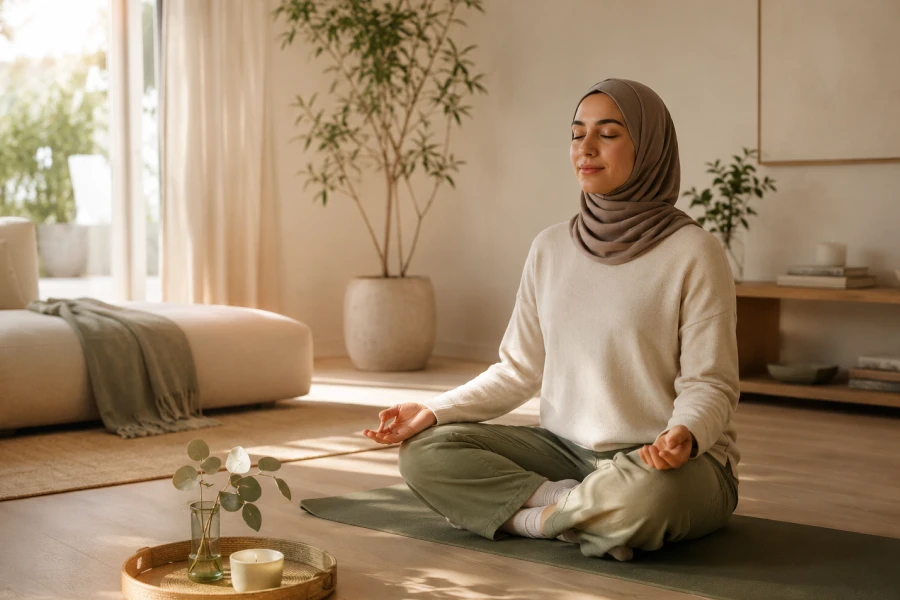
An anxious moment can make every thought feel urgent and every decision feel immediate. You may not be able to make the feeling disappear on command. Mindful breathing for anxiety offers a small place to begin without demanding instant calm. Start by noticing where the breath already is. It may feel high in your chest, quick, uneven, or hard to follow. There is no need to correct it immediately. First, simply acknowledge what is happening. That act of noticing can create a little distance from the rush. You are responding to the moment rather than arguing with it. For some people, that is a meaningful first step.
A breathing pause is not a test of whether you can make anxiety vanish. It is a way to give yourself a little more choice in the next moment. Start small enough that you do not feel trapped by the exercise. One natural inhale and one unhurried exhale are enough. You can stop and look around whenever you need to. The practice is meant to support you, not contain you. That is why comfort matters more than technique. Your response may change from one day to the next. Let the practice change with it. Gentle attention is the point.
Forceful breathing techniques can feel uncomfortable when you are already tense. Choose a softer approach that feels physically manageable. Let the exhale become slightly longer than the inhale only if that feels natural. Use a breath awareness tool to notice the movement of air without trying to perform it perfectly. You can rest a hand on your abdomen or simply feel the air at your nostrils. If counting helps, count one exhale at a time and begin again when you lose track. If counting adds pressure, leave it out. The practice should reduce demands, not add more. Gentleness makes it easier to return to the breath later. Your body gets to set the pace.
Sometimes closing your eyes makes a difficult moment feel more intense. Keep them open and choose a neutral point in the room instead. Look at the edge of a table, a tree outside, or the pattern of light on a wall. Pair that visual anchor with one slow exhale. A present-moment exercise can include sight, sound, and touch rather than breathing alone. Name three things you can see and two things you can feel. This expands the practice beyond your thoughts. It reminds your attention that the whole room still exists. You are here, even when the feeling is loud. Grounding can be more accessible when it uses the senses.
You do not need a private meditation room to take a brief pause. You can practice quietly at a desk, on a train, in a waiting room, or during a walk. Keep the movements small and the expectations smaller. Use a grounding routine that does not draw attention when privacy is limited. For example, feel both feet on the floor while allowing one unhurried exhale. You might loosen your hands or lower your shoulders as you breathe. These tiny actions can interrupt the urge to react immediately. They also give you a moment to choose your next step. Public spaces do not remove your ability to pause. They simply call for a quieter version of the practice.
Breathing exercises can be useful, but they do not replace support for significant or persistent anxiety. If symptoms feel overwhelming, interfere with daily life, or create safety concerns, seek professional help promptly. You can also contact local emergency services or a crisis resource when immediate support is needed. Use a self-compassion habit to remind yourself that asking for help is a reasonable response. You do not have to handle every hard moment alone. A trusted person can sit with you, help you make a plan, or simply stay connected. Breathing can be one tool inside a larger support system. It does not need to carry the entire job. That realistic view keeps the practice grounded. Care works best when it matches the level of need.
It is often easier to learn a breathing practice during a neutral moment. Try it after waking, before bed, or while waiting for the kettle to boil. Practice for one minute and stop before it becomes tedious. Over time, the steps may feel more familiar when you need them. Keep your version simple enough to remember without instructions. One hand, one exhale, one visual anchor can be enough. Notice what feels supportive and what feels uncomfortable. Adjust the practice without judging yourself for changing it. The point is not mastery. The point is having a gentle option available when you want a pause. A familiar pause may feel easier to access when things become difficult. That familiarity can support your next thoughtful choice without solving the entire feeling.



Leave a comment